Bitget Partners with University of Zurich Blockchain Center, Providing Opportunities and Scholarships for Students

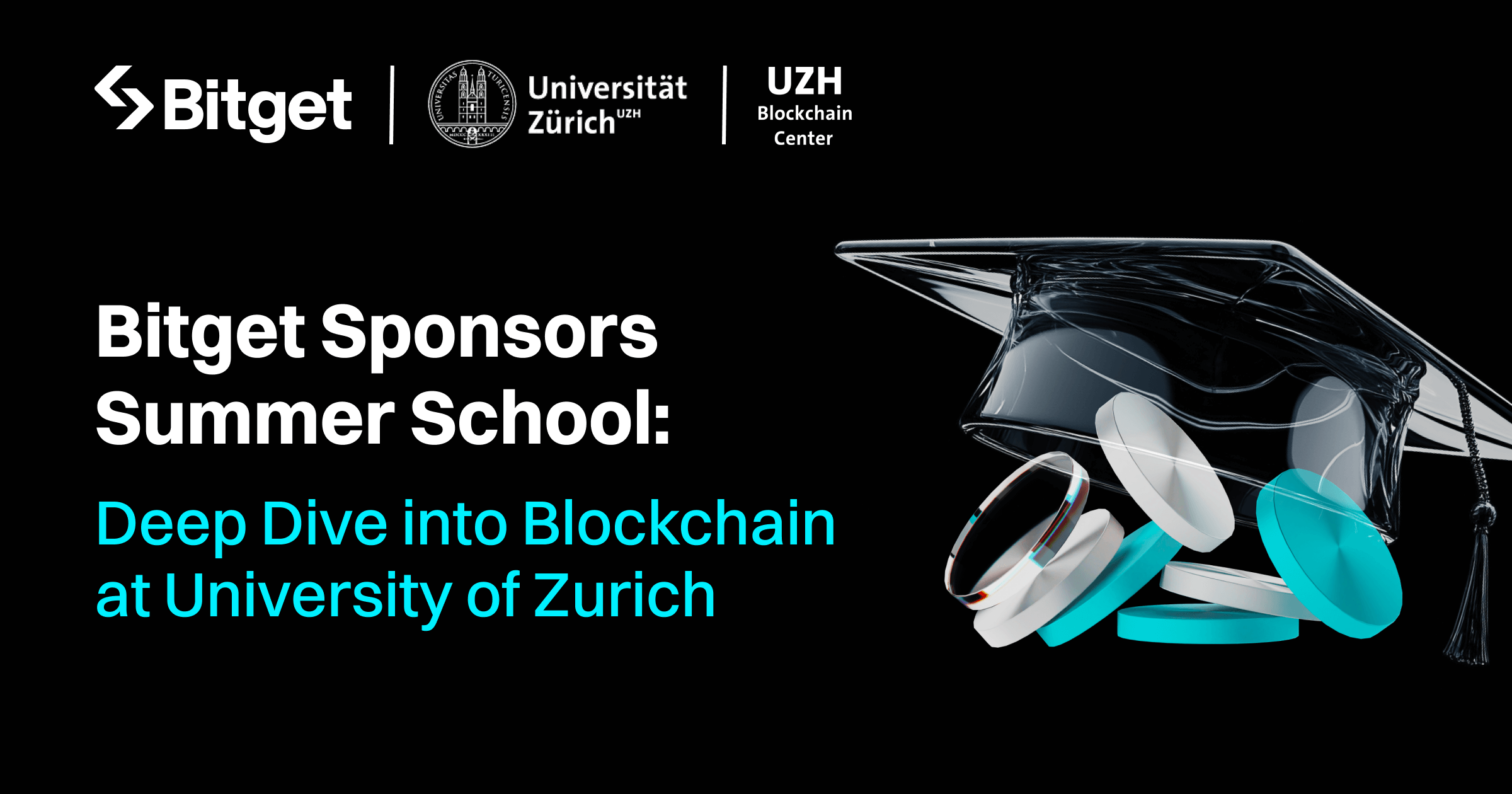
Bitget Sponsors Summer School: Deep Dive into Blockchain at University of Zurich
Blog_1200X630-33

Bitget Sponsors Summer School: Deep Dive into Blockchain at University of Zurich

VICTORIA, Seychelles, June 04, 2025 (GLOBE NEWSWIRE) — Bitget, the leading cryptocurrency exchange and Web3 company, has announced a partnership with the University of Zurich, the world’s top #3 university (according to Coindesk’s 2021/22 rankings) for blockchain education. The exchange will sponsor the 6th edition of International Summer School—Deep Dive into Blockchain 2025 program at the University of Zurich Blockchain Center (UZH BCC), offering scholarships and career opportunities to blockchain-curious students. This marks a new chapter in Bitget’s commitment to blockchain education and youth empowerment.

The scholarship initiative, part of Bitget’s broader $10M Blockchain4Youth (B4Y) program, aims to make high-impact blockchain education more accessible to bright, motivated students, presenting them with wider opportunities. Deep Dive into Blockchain (DDiB) is the University of Zurich’s flagship international summer school, hosted by the Faculty of Business, Economics, and Informatics in collaboration with the Global Student Experience and organized by the UZH Blockchain Center under the academic leadership of its chairman, Prof. Dr Claudio J. Tessone. The three-week program offers an immersive, interdisciplinary exploration of blockchain from academic, technological, legal, and economic perspectives.

“We are delighted to partner with Bitget for Deep Dive into Blockchain. Their support empowers the next generation of blockchain professionals by making education all around the globe more accessible. This collaboration reflects our shared vision of fostering innovation, diversity, and global talent in the Web3 space,” — Dr Claudio J. Tessone, Professor of Blockchain and Distributed Ledger Technologies, University of Zurich, and Director of Deep Dive into Blockchain.

In an ecosystem often defined by its complexity and speed, education remains the most enduring bridge between innovation and understanding. Built on these beliefs, Bitget is funding scholarships for up to 10 students who meet both the academic and financial criteria set by UZH. More than just a subsidy, the Bitget Blockchain4Youth Scholarship is a belief that the future of blockchain should be built by the most capable minds, not just the most privileged.

Each scholarship will fully cover tuition, accommodation, transportation within Zurich, access to academic materials and site visits, as well as participation in intercultural programs and events. This comprehensive support structure is designed to empower students to focus not on logistics but on learning, and to walk away not only with a certificate but with a deeper perspective.

“As someone who entered this industry from outside the traditional mold, I know what access and opportunity can unlock. This scholarship isn’t just about learning blockchain—it’s about equipping future leaders with the tools to question, to build, and to leave the space better than they found it. That’s the kind of legacy we want to help shape,” said Vugar Usi Zade, COO at Bitget.

“As much as the world needs more developers, lawyers, or economists, it needs more cross-disciplinary thinkers who understand the full societal impact of blockchain,” he added.

The 2025 program will also feature a masterclass by Bitget COO, Vugar Usi Zade, offering students firsthand insight from one of the industry’s leading operators. This academic-industry dialogue enables the long-term strategic partnership between Bitget and UZH, anchored in mutual goals of innovation, education, and responsible development.

With this partnership, Bitget isn’t just funding education. It’s shaping the future of the industry.

For more details and updates, visit the official program page here.

About Bitget

Established in 2018, Bitget is the world’s leading cryptocurrency exchange and Web3 company. Serving over 100 million users in 150+ countries and regions, the Bitget exchange is committed to helping users trade smarter with its pioneering copy trading feature and other trading solutions, while offering real-time access to Bitcoin priceEthereum price, and other cryptocurrency prices. Formerly known as BitKeep, Bitget Wallet is a world-class multi-chain crypto wallet that offers an array of comprehensive Web3 solutions and features including wallet functionality, token swap, NFT Marketplace, DApp browser, and more.
Bitget is at the forefront of driving crypto adoption through strategic partnerships, such as its role as the Official Crypto Partner of the World’s Top Football League, LALIGA, in EASTERN, SEA and LATAM markets, as well as a global partner of Turkish National athletes Buse Tosun Çavuşoğlu (Wrestling world champion), Samet Gümüş (Boxing gold medalist) and İlkin Aydın (Volleyball national team), to inspire the global community to embrace the future of cryptocurrency.

For more information, visit: Website | Twitter | Telegram | LinkedIn | Discord | Bitget Wallet

For media inquiries, please contact: [email protected]

Risk Warning: Digital asset prices are subject to fluctuation and may experience significant volatility. Investors are advised to only allocate funds they can afford to lose. The value of any investment may be impacted, and there is a possibility that financial objectives may not be met, nor the principal investment recovered. Independent financial advice should always be sought, and personal financial experience and standing carefully considered. Past performance is not a reliable indicator of future results. Bitget accepts no liability for any potential losses incurred. Nothing contained herein should be construed as financial advice. For further information, please refer to our Terms of Use.

A photo accompanying this announcement is available at https://www.globenewswire.com/NewsRoom/AttachmentNg/ad7380ff-4658-40ef-9f49-2d963e254957

GlobeNewswire Distribution ID 1001100723
The British Council drives educational innovation through Action Research, benefiting educators worldwide

  • The British Council has established itself as a key facilitator of international educational improvement by supporting Action Research as a platform that has delivered tangible progress in schools worldwide.
  • Innovative educator-led research projects have improved teaching and learning in countries such as Pakistan, Egypt and Colombia, delivering measurable results in schools.
  • An AI-based maths project enhanced students’ understanding and performance. 80% reported that using digital platforms strengthened their problem-solving skills through active learning and critical thinking.

CAIRO, Egypt, June 04, 2025 (GLOBE NEWSWIRE) — Through the Action Research programme, the British Council supports educational improvement worldwide. As the UK’s organisation for cultural relations and educational opportunities, it plays a key role in facilitating global progress in education.

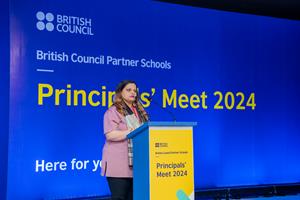
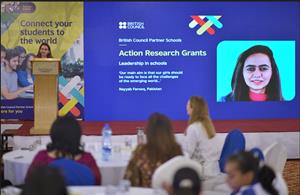
Presentation of the Action Research Programme

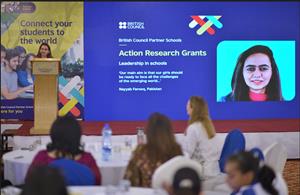
Presentation of the Action Research Programme

This initiative not only provides educators with funding, mentoring, and resources to implement research findings directly in their classrooms but also fosters the exchange of best practices among schools and teaching communities. Its impact cascades through local forums and Partner School events, reaching school leaders, teachers, and ultimately students. The programme has already resulted in tangible improvements in participating schools and underscores the British Council’s commitment to evidence-based, forward-looking education.

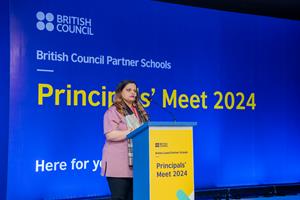
Presentation of the Action Research Programme

Presentation of the Action Research Programme

The British Council Partner Schools’ Action Research programme supported twelve researchers from nine countries: Pakistan, Egypt, Bangladesh, Nigeria, Ghana, Jordan, Zimbabwe, Peru, and Colombia on projects focused on leadership, continuous professional development (CPD), and technology, addressing shared global challenges in education.

The projects revealed key insights into technology, teacher development, and leadership as drivers of educational improvement. Many focused on digital learning, AI, and online platforms, reflecting a keen global interest in technology to support education. In Colombia, 80% of students reported that digital tools improved their skills, especially in problem-solving and critical thinking. Research on CPD shows that group reflection on individually completed training leads to greater gains in teaching quality and student outcomes than isolated professional development.

Leadership emerged as a recurring theme. In Pakistan, student-led projects empowered girls through academics, extracurricular activities, leadership roles, challenging gender norms and creating community-wide change. Across all participating countries, inclusive engagement, from students to families and school leaders, was essential to co-creating sustainable, impactful solutions.

The new publication Action Research for Schools: Global Stories of School Improvement captures these findings and shares practical strategies for schools facing similar challenges around the world.

“Backed by the British Council’s support, the researcher in Egypt went above and beyond, delivering meaningful change in their schools and contributing to a culture of continuous improvement,” reflected Ammar Ahmed, Director Exams Egypt, British Council.

Building on its success, the British Council has launched the second year of the programme, awarding grants to thirteen new researchers. Visit our website to learn more.

About British Council Partner Schools

British Council Partner Schools is a global community of over 2,300 schools, supported by the British Council, delivering UK qualifications. We help improve education quality, supporting learners worldwide to achieve their potential through UK education and qualifications. We support Partner Schools in over 40 countries, transforming the lives of over 250,000 students each year.

About the British Council

The British Council is the UK’s international organisation for cultural relations and educational opportunities. We support peace and prosperity by building connections, understanding and trust between people in the UK and countries worldwide. We do this through our work in arts and culture, education and the English language. We work with people in over 200 countries and territories and are on the ground in more than 100 countries. In 2022-23 we reached 600 million people.

Contact:

[email protected]

Regional Senior Communications Manager, Middle East and North Africa

Photos accompanying this announcement are available at

https://www.globenewswire.com/NewsRoom/AttachmentNg/e4e11ea9-bd14-4093-ac7a-932dcbba3b2b

https://www.globenewswire.com/NewsRoom/AttachmentNg/bbc4ff6e-2e80-4b9e-b600-f8797f79bf87

GlobeNewswire Distribution ID 1001100689

The British Council Drives Educational Innovation Through Action Research, Benefiting Educators Worldwide

  • The British Council has established itself as a key facilitator of international educational improvement by supporting Action Research as a platform that has delivered tangible progress in schools worldwide.
  • Innovative educator-led research projects have improved teaching and learning in countries such as Pakistan, Egypt, and Colombia, delivering measurable results in schools.
  • An AI-based maths project enhanced students’ understanding and performance. 80% reported that using digital platforms strengthened their problem-solving skills through active learning and critical thinking.

AMMAN, Jordan, June 04, 2025 (GLOBE NEWSWIRE) — Through the Action Research programme, the British Council supports educational improvement worldwide. As the UK’s organisation for cultural relations and educational opportunities, it plays a key role in facilitating global progress in education.

Presentation of the Action Research Programme

Presentation of the Action Research Programme

This initiative not only provides educators with funding, mentoring, and resources to implement research findings directly in their classrooms, but also fosters the exchange of best practices among schools and teaching communities. Its impact cascades through local forums and Partner School events, reaching school leaders, teachers, ultimately students and has already resulted in tangible improvements in participating schools.

Presentation of the Action Research Programme

Presentation of the Action Research Programme

The British Council Partner Schools’ Action Research programme supported twelve researchers from nine countries: Pakistan, Egypt, Bangladesh, Nigeria, Ghana, Jordan, Zimbabwe, Peru, and Colombia on projects focused on leadership, continuous professional development (CPD), and technology, addressing shared global challenges in education.

The projects revealed key insights into technology, teacher development, and leadership as drivers of educational improvement. Many focused on digital learning, AI, and online platforms, reflecting a keen global interest in technology to support education. In Colombia, 80% of students reported that digital tools improved their skills, especially in problem-solving and critical thinking.

Leadership was also key: in Pakistan, one of the four projects empowered female students through academic achievement, extracurricular engagement, and leadership roles that challenge gender norms and drive community change. Across all projects, inclusive participation from students to families and school leaders proved essential to identifying needs and co-creating effective, lasting solutions.

The new publication Action Research for Schools: Global Stories of School Improvement presents these findings and practical solutions to help schools worldwide address similar challenges.

“Receiving the Action Research grant was a transformative milestone,” said Shireen from Al Ridwan School. “It enabled me to explore a real classroom challenge and connect with passionate educators globally. This sparked a culture of action research across our school, inspiring collective growth as reflective practitioners.”

Ameera Mannaa, Exams Director MENA South, British Council remarked: “We are proud to see Partner Schools driving real educational change. The impact is clear: students think critically, teachers grow collaboratively, and schools become hubs of continuous improvement.”

Building on its success, the British Council has launched the second year of the programme. Visit our website to learn more.

About British Council Partner Schools

British Council Partner Schools is a global community of over 2,300 schools, supported by the British Council, delivering UK qualifications. We help improve education quality, supporting learners worldwide to achieve their potential through UK education and qualifications. We support Partner Schools in over 40 countries, transforming the lives of over 250,000 students each year.

About the British Council

The British Council is the UK’s international organisation for cultural relations and educational opportunities. We support peace and prosperity by building connections, understanding and trust between people in the UK and countries worldwide. We do this through our work in arts and culture, education and the English language. We work with people in over 200 countries and territories and are on the ground in more than 100 countries. In 2023-24 we reached 600 million people.

Contact:

[email protected]

Regional Communications Manager Middle East and North Africa

Photos accompanying this announcement are available at

https://www.globenewswire.com/NewsRoom/AttachmentNg/7460284c-f736-4925-be01-001477dadec1

https://www.globenewswire.com/NewsRoom/AttachmentNg/d8e12b5e-ab51-45fa-ad22-982a4b960a2a

GlobeNewswire Distribution ID 1001100510

15 Years of Inventing Quiet: How Framery Created the Office Pod

TAMPERE, Finland, June 04, 2025 (GLOBE NEWSWIRE) — Framery, the global leader in designing, manufacturing, and marketing soundproof office pods, is proud to announce its 15th anniversary, a milestone that also marks 15 years since the company invented the office pod, fundamentally changing how millions work.

Framery Pod Evolution
Framery_Pod_evolution_high-res

The evolution of the office pod from left to right: Pömpeli, Framery C, Framery O, Framery One

How Framery pods have evolved over 15 years: from the original “Pömpeli” on the left through to the present-day Smart Pod models on the right

Founded in 2010, Framery was born out of the shared frustrations of working in a distracting open-plan office environment. Samu Hällfors, CEO and co-founder, then in his early twenties and working in an open-plan office, experienced firsthand the challenges of maintaining focus amidst constant noise. “The constant noise, particularly from our boss’s phone calls, was incredibly frustrating,” recalls Hällfors. “My friend and I suggested he take his calls elsewhere, and he responded, “Well, buy me a phone booth.”

Framery Smart Pods Range
Framery_Smart_Pods_range_high-res

The new Framery Smart Pods from left to right: Framery Six, Framery Four, Framery One, Framery One Compact

Framery’s latest Smart Pods incorporate smart office solutions that address the most pressing challenges of today’s hybrid work environments.

The request ignited an idea. Since no such options existed, Framery’s founders recognized a big opportunity. In their garage, they built the first office pod prototype, affectionately named “Pömpeli” (a Finnish word for “box”). This became the world’s first commercial office pod, launched in 2010. It not only met a key need for quiet, but also created a whole new product category and the company Framery. This led to more models and continuous innovation. In 2013, Framery launched the Framery O, the first pod to achieve a 30dB speech reduction, and it remains one of the world’s best-selling pods to this day.

Framery CEO

Samu Hällfors

Since those humble beginnings, Framery has grown exponentially, becoming synonymous with high quality and effective soundproof spaces. What started as a solution for a few colleagues is now a necessity for millions of knowledge workers in over 100 countries, utilized by most of the world’s leading companies, including industry giants like Nvidia, Puma, BCG and Microsoft. Today, approximately 70% of all Forbes Top 100 companies rely on Framery’s products to create more functional and productive workspaces.

Last year marked the most significant milestone for the office pod industry since Framery invented the product category with the launch of the first smart pod. Building upon Framery’s renowned acoustic privacy, these next-generation pods incorporate smart office solutions that address the most pressing challenges of today’s hybrid work environments.

“This seamless fusion of smart features with our physical pod design became a true catalyst for the industry,” says Samu Hällfors. “Just as smart features have become standard in many other product categories, we saw this as an expected and necessary evolution for office pods to truly support the modern workplace.”

Celebrating 15 years since creating the office pod industry, Framery views this milestone as a launchpad for future innovation and leadership. What began in a garage has become integral to modern workspace design, and Framery continues to drive the evolution of how we work.

ABOUT FRAMERY

Framery is the global leader in soundproof pods and smart office solutions, enabling people to focus on what truly matters and get things done. Framery is a necessity for a successful workday for millions of knowledge workers in over 100 countries and within most of the world’s leading companies including Nvidia, Puma, and Microsoft. In fact, around 70% of all Forbes Top 100 companies use our products.

For further information and interview requests please contact: [email protected]

All photos accompanying this announcement are available at:
https://www.globenewswire.com/NewsRoom/AttachmentNg/00116d3d-55c8-49d6-97bb-39896d50ca01
https://www.globenewswire.com/NewsRoom/AttachmentNg/38a240a8-128c-419b-a431-f596eb441efc
https://www.globenewswire.com/NewsRoom/AttachmentNg/ade7f344-3555-4756-abe0-83b57a44a458

GlobeNewswire Distribution ID 9463020

Egypt and Saudi Arabia are the easiest countries for doing business in the Middle East, says GBCI 2025

LONDON, June 04, 2025 (GLOBE NEWSWIRE) — The Middle East is positioned as a mid-complexity region for doing business in the Global Business Complexity Index (GBCI) recently launched by TMF Group.

The report ranks 79 jurisdictions, accounting for 94% of the world’s GDP, based on their business complexity, with 1 being the most complex and 79 the least complex. Within the Middle East, Egypt is ranked 37th globally, followed closely by the Kingdom of Saudi Arabia at 38th, the United Arab Emirates (UAE) at 39th and Qatar at 44th.

Egypt has decreased in complexity from last year’s position of 28th, mainly due to several strategic efforts and developments. For example, the country’s adoption of diverse logistic solutions and strengthening of trade corridors has played a pivotal role in mitigating economic pressures and geopolitical risks. The establishment of integrated logistics corridors and free zones, coupled with incentives like simplified customs procedures, has also enhanced accessibility for foreign businesses.

Saudi Arabia has also improved its position, ranking 38th this year (one point less complex than last year), with resilience amid geopolitical disruptions and Vision 2030 initiatives being highlighted as key drivers of the ease of complexity. The country’s strategy to diversify its economy beyond oil dependency continues at the forefront, as the Kingdom invests in trade infrastructure and regulatory frameworks, enhancing supply chain resilience. In addition, under Vision 2030, Saudi Arabia is striving to reduce its vulnerability to geopolitical threats. Parallelly, investments in infrastructure aim to establish the Kingdom as a global logistics hub.

The UAE, ranking 39th this year, continues to position itself as a resilient hub amid global geopolitical disruptions. Strict regulations in place aim to ensure operations are compliant and secure, and contribute to the UAE being seen as a ‘safe haven’ for a diverse range of sectors. These regulations help mitigate risks and provide stability for businesses, fostering confidence among investors and enterprises. With multiple entry points and robust infrastructure, the UAE offers reliable trade corridors.

With a slight increase in its complexity, Qatar is ranked 44th (last year, it ranked 48th). The geopolitical landscape remains volatile, with Qatar being involved in multiple peace talks, which underscores regional unpredictability and contributes to the heightened sense of uncertainty in the business environment. Additionally, the labour market faces challenges such as increased staff turnover and wage inflation, impacting cost efficiency.

Achin Malik, TMF Group’s Middle East, India and Africa Market Head, commented:

“Complexity is no longer the biggest challenge for business worldwide: uncertainty is. At a time of great instability in global trade and rising geopolitical tensions, the Middle East is increasingly strengthening its trade corridors — and exploring new ones. This positions countries like Egypt, Saudi Arabia, UAE and Qatar as resilient hubs for businesses amid geopolitical and natural disruptions, in a context of increased unpredictability.”

Global top and bottom ten (1= most complex, 79= least complex) 
1. Greece  79. Cayman Islands
2. France  78. Denmark
3. Mexico  77. New Zealand
4. Turkey  76. Hong Kong, SAR
5. Colombia  75. Jersey
6. Brazil  74. Netherlands
7. Italy  73. Jamaica
8. Bolivia  72. British Virgin Islands
9. Kazakhstan  71. Curaçao
10. China  70. Czech Republic

Media Contacts

TMF Group

Marina Llibre Martín, Global PR Manager
[email protected]

GlobeNewswire Distribution ID 1001100412

Hong Kong and New Zealand, the easiest jurisdictions for doing business in APAC, says GBCI 2025

LONDON, June 04, 2025 (GLOBE NEWSWIRE) — The Global Business Complexity Index (GBCI), recently launched by TMF Group, analyses the business environment of 79 jurisdictions, accounting for 94% of the world’s GDP. It also ranks them based on over 250 indicators of business complexity, with the jurisdiction ranked 1st as the most complex and the jurisdiction ranked 79th, the least.

Among the world’s 10 least complex jurisdictions for doing business, Hong Kong, SAR remains the 4rth easiest jurisdiction for the second year in a row. The jurisdiction offers a favourable business environment, characterised by a straightforward and low tax regime that appeals to international businesses.

New Zealand, also included in the 10 easiest jurisdictions worldwide, maintains its reputation as a straightforward place for business operations. This is largely due to the government’s proactive approach in welcoming foreign investments and streamlined administrative processes.

Meanwhile, business complexity in India (18th) is mainly driven by recent regulatory changes, according to this year’s GBCI report. Over the past year, India has introduced numerous regulatory amendments aimed at boosting transparency and accountability. Although these are expected to bring benefits in the long term, they have added layers of complexity for businesses operating in the country, requiring constant adaptation to new compliance needs.

Japan is ranked 43rd in this year’s GBCI, showing a decrease in complexity from last year’s position (38th). This decrease in complexity is partly due to recent simplifications and governmental initiatives to provide English-language support to international financial service companies. These measures facilitate easier operations and reduce barriers for foreign businesses, improving investment attractiveness.

Singapore, ranking 48th, continues to demonstrate resilience and adaptability in its trade corridors. This jurisdiction invests heavily in technology and infrastructure upgrades, reinforcing its status as a regional hub.

China’s Mainland (10th) enters the top 10 most complex jurisdictions for businesses in 2025. According to the report, the complexity is driven by its frequent regulatory changes and regional disparities. Despite these challenges, the government continues to offer incentives to attract investment and to promote infrastructure development to enhance trade logistics.

TMF Group’s Head of APAC, Shagun Kumar, commented: “We’re seeing a growing effort by decision-makers and businesses across APAC to reduce unnecessary burdens for doing business in the region — these have in the past delayed development, leading to complex evaluations for investment. Such efforts contribute to unlocking the region’s drive towards economic growth, and we expect businesses to adapt and continue to leverage the potential of APAC as a key contributor for their global strategies.”

Top and bottom ten (1= most complex, 79= least complex) 
1. Greece  79. Cayman Islands
2. France  78. Denmark
3. Mexico  77. New Zealand
4. Turkey  76. Hong Kong, SAR
5. Colombia  75. Jersey
6. Brazil  74. Netherlands
7. Italy  73. Jamaica
8. Bolivia  72. British Virgin Islands
9. Kazakhstan  71. Curaçao
10. China’s Mainland  70. Czech Republic
   

Media Contacts
Marina Llibre Martin
[email protected]

GlobeNewswire Distribution ID 1001100538