CGTN: Head-of-state diplomacy anchors growing China-Russia partnership

Ahead of Russian President Vladimir Putin’s visit to China from May 19 to 20, CGTN has published an article examining the evolution of China-Russia relations at a historically significant moment.

The piece highlights how sustained head-of-state diplomacy has strengthened political mutual trust and how China and Russia have developed a model of major-country relations characterized by mutual respect, peaceful coexistence and win-win cooperation, offering a clear example of stability and continuity in a turbulent world.

BEIJING, May 17, 2026 (GLOBE NEWSWIRE) — At the invitation of Chinese President Xi Jinping, Russian President Vladimir Putin will pay a state visit to China from May 19 to 20, a fresh demonstration of the close high-level exchanges that have become a distinctive feature of China-Russia relations in the new era.

Putin’s visit comes at a historically significant moment. This year marks the 25th anniversary of the signing of the China-Russia Treaty of Good-Neighborliness and Friendly Cooperation and the founding of the Shanghai Cooperation Organization (SCO), as well as the 30th anniversary of the establishment of the China-Russia comprehensive strategic partnership of coordination.

Over the past decade, head-of-state diplomacy has played a central role in steering bilateral ties through a rapidly changing global landscape. Since 2013, Xi and Putin have maintained frequent interactions. Xi has visited Russia 11 times, while Putin has traveled to China 13 times, underscoring the enduring strength and strategic nature of bilateral relation

Head-of-state diplomacy provides strategic guidance

“The frequency and depth of their interactions are rarely seen anywhere else in the world,” said Zhao Long, a research fellow at the Center for Russian and Central Asian Studies at the Shanghai Institutes for International Studies.

He noted that the two leaders have met more than 40 times over the past decade, and that head-of-state diplomacy has become a strong pillar of the high level of mutual trust and a key driving force behind practical cooperation across a wide range of sectors.

In March 2013, Russia became the first country Xi visited after taking office as Chinese president. In 2019, the two sides upgraded bilateral relations to a comprehensive strategic partnership of coordination for a new era, the highest level in the history of bilateral relations.

In 2025, Putin visited China to attend the SCO summit and commemorative events marking the 80th anniversary of the victory in the Chinese People’s War of Resistance against Japanese Aggression and the World Anti-Fascist War. On February 4 this year, Xi and Putin held a video meeting to discuss future development of bilateral ties and their coordination on international platforms.

Under the guidance of the two heads of state, China and Russia have continuously deepened political mutual trust and firmly supported each other on issues concerning their core interests, including sovereignty, security and development. The two sides have also strengthened coordination on major international platforms such as the United Nations, SCO, BRICS, APEC and the G20, jointly opposing unilateralism and contributing to build a multipolar world.

Xi has previously stated that China and Russia have explored a new path for neighboring major countries to get along with each other, characterized by non-alliance, non-confrontation, and not targeting any third party, setting an example of a new type of major-country relations.

Practical cooperation reaches new heights

With deepening political mutual trust, the two countries have achieved fruitful results through extensive practical cooperation across fields such as trade, energy, and culture.

Faced with global headwinds, the two countries’ economic and trade cooperation has continued to expand, with the two sides actively advancing the alignment between the Belt and Road Initiative (BRI) and the Eurasian Economic Union. More than 70% of China-Europe freight trains under the BRI pass through Russia en route to Europe, with the number of trips continuing to reach record highs.

China has remained Russia’s largest trading partner for 16 consecutive years. According to the latest data from China’s Ministry of Commerce, bilateral trade reached $227.9 billion in 2025, surpassing the $200 billion mark for the third consecutive year. In the first quarter of this year, bilateral trade totaled $61.2 billion, up 14.7% year on year.

People-to-people exchanges have also continued to flourish. The two countries have jointly organized a range of exchange programs over the years, including language years, tourism years, youth exchange years and cultural years.

During the 2024-2025 China-Russia Years of Culture, the two countries held a series of cultural exchange activities. The original Chinese dance drama Wing Chun was performed at Moscow’s Bolshoi Theatre, while performances in China by Russia’s Mariinsky Theatre Orchestra and the Bolshoi Ballet were met with overwhelming demand. In 2025, China and Russia also introduced a mutual visa-free policy, triggering a tourism boom between the two countries.

From deepening political mutual trust to expanding practical cooperation and growing people-to-people exchanges, China and Russia have continued to strengthen their bilateral friendship.

Against a backdrop of growing global uncertainty, the upcoming meeting between the two heads of state is expected to further advance bilateral ties, deliver greater benefits to the two peoples, and contribute more stability and positive momentum to a changing world.

https://news.cgtn.com/news/2026-05-17/Head-of-state-diplomacy-anchors-growing-China-Russia-partnership-1NdoTiyrmVi/p.html

Contact:
CGTN Digital
[email protected]

GlobeNewswire Distribution ID 9721804
Bitget UEX Report: Retail Investors Move Beyond Crypto as 52% Add Equities And 51% Use AI

Bitget UEX Report: Retail Investors Move Beyond Crypto as 52% Add Equities And 51% Use AI


Bitget UEX Report: Retail Investors Move Beyond Crypto as 52% Add Equities And 51% Use AI

Bitget UEX Report: Retail Investors Move Beyond Crypto as 52% Add Equities And 51% Use AI

VICTORIA, Seychelles, May 14, 2026 (GLOBE NEWSWIRE) — Bitget, the world’s largest Universal Exchange (UEX), has released the Bitget User Asset Allocation Report 2026 with data showing that retail investors are expanding beyond crypto into commodities, equities, and AI-assisted investing as portfolio construction becomes more diversified across global asset classes. The findings combine trading activity on Bitget with responses from more than 6,000 users globally.

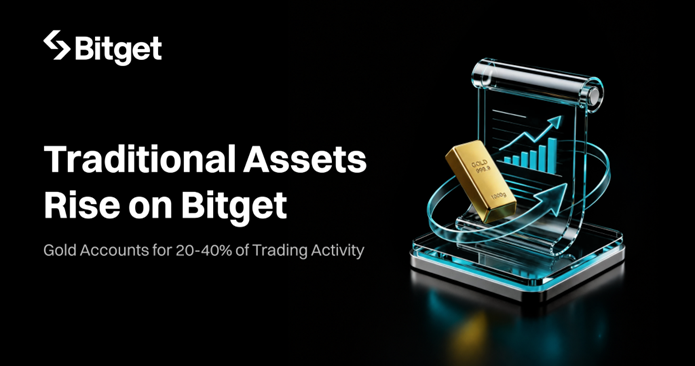
Crypto remained the main source of trading activity in Q1 2026, with 86% of surveyed users holding crypto assets. Crypto accounted for nearly all trading volume in early January before stabilizing in a 60% to 80% range by March as participation broadened into other markets. Over the same period, trading in traditional assets led by gold rose from near zero to between 20% and 40% of total activity, marking the strongest quarterly increase recorded for non-crypto assets on Bitget.

The data highlighted that 52% of users globally now hold equities alongside crypto, while 35% hold gold or other precious metals, making commodities the most widely adopted non-crypto asset category among surveyed participants. AI and precious metals or crude oil emerged as the two themes users most closely associate with investment opportunities in 2026.

Among high-net-worth participants, diversification is accelerating further. Bitget users recorded an average annual return of 13% in 2025, while around 6% of VIP users achieved annual returns between 51% and 100%. Among surveyed high-value users, 74% said they plan to expand across crypto, equities, and commodities in 2026 to manage risk more actively.

Regional trading preferences continue to reflect local macro conditions. In East Asia, 60% of users ranked avoiding currency conversion as a key reason for using USDT settlement, while 48% prioritized avoiding traditional account-opening requirements. In Southeast Asia, 46% of users identified leverage access as a major reason for trading traditional assets. In Latin America, 78% said diversification and protection against inflation or currency depreciation are their main reasons for holding both crypto and traditional assets.

AI adoption is also becoming part of core trading behavior. 51% of surveyed users said they already use AI tools to support investment decisions. Bitget’s AI products, including GetAgent, GetClaw, and Agent Hub, are increasingly used to interpret earnings releases, commodity price moves, macroeconomic developments, and onchain signals across asset classes.

Gracy Chen, CEO of Bitget, said: “Retail trading behavior is becoming more macro-aware. Users are moving capital across asset classes based on liquidity, volatility, and market access, and they increasingly expect one platform to support that efficiently. Stablecoin-based settlement is becoming a practical entry point for broader market participation. The stronger demand for commodities, equities, and AI tools shows that users are building portfolios around global signals, not around a single asset category.”

Survey results also show a strong demand for the Universal Exchange model. 71% of users identified USDT settlement as the most important feature, while 65% ranked the fast switching across crypto, equities, forex, and commodities within one account as a top priority. Users consistently described the ideal trading platform as one that combines global asset access, stablecoin settlement, centralized liquidity, transparent reserve verification, and AI-assisted decision tools within one system.

For more information, please visit here.

About Bitget
Bitget is the world’s largest Universal Exchange (UEX), serving over 125 million users and offering access to over 2M crypto tokens, 100+ tokenized stocks, ETFs, commodities, FX, and precious metals such as gold. The ecosystem is committed to helping users trade smarter with its AI agent, which co-pilots trade execution. Bitget is driving crypto adoption through strategic partnerships with LALIGA and MotoGP™. Aligned with its global impact strategy, Bitget has joined hands with UNICEF to support blockchain education for 1.1 million people by 2027. Bitget currently leads in the tokenized TradFi market, providing the industry’s lowest fees and highest liquidity across 150 regions worldwide.

For more information, visit: Website | Twitter | Telegram | LinkedIn | Discord
For media inquiries, please contact: [email protected]

Risk Warning: Digital asset prices are subject to fluctuation and may experience significant volatility. Investors are advised to only allocate funds they can afford to lose. The value of any investment may be impacted, and there is a possibility that financial objectives may not be met, nor the principal investment recovered. Independent financial advice should always be sought, and personal financial experience and standing carefully considered. Past performance is not a reliable indicator of future results. Bitget accepts no liability for any potential losses incurred. Nothing contained herein should be construed as financial advice. For further information, please refer to our Terms of Use.

A photo accompanying this announcement is available at https://www.globenewswire.com/NewsRoom/AttachmentNg/db27ba82-5ba8-43e0-a8b9-9187d81c991b

GlobeNewswire Distribution ID 1001181953

Quest Software Extends Data and AI Leadership with Quest Data Modeler and Quest Data Intelligence, Enhancing its Trusted Data Management Platform

New capabilities deliver cloud-native modeling, AI-powered policy management, and an expanded library of QuestAI assistants, giving modern data teams a single, governed foundation for analytics and AI initiatives — from data structure to data access

AUSTIN, Texas, May 13, 2026 (GLOBE NEWSWIRE) — Quest Software, a global leader in data management, cybersecurity and platform modernization, today announced two major releases to the Quest Trusted Data Management Platform, the industry’s only unified, end-to-end SaaS platform for trusted, AI-ready data. Building on the Automated Data Product Factory, the transformative new capability introduced earlier this year, the platform’s new AI-powered capabilities deliver innovative technology for modern data teams with the release of Quest Data Modeler, a cloud-native data modeling tool, and Quest Data Intelligence, which expands the library of AI assistants spanning governance, lineage, compliance, data products, data quality, and natural-language access to governed data. To learn more, visit: quest.com/data-management-platform.

Most organizations stitch together separate data modeling tools, governance suites, and AI assistants, leaving them with multiple naming definitions, broken audit trails, and AI assistants running on ungoverned data. Quest Data Modeler and Quest Data Intelligence, working jointly within the Quest Trusted Data Management Platform, eliminates that fragmentation, giving customers a trusted, reliable experience with a shared understanding of their data. Data modeling establishes the logical definition and naming standards, and data governance keeps those standards consistent across the platform creating consistent business terms wherever data is consumed. QuestAI assistants speak the same language to every user. The result is one platform, one audit trail, and one shared understanding of data from how it is structured to how it is consumed.

”Trusted data is the backbone of any modern AI strategy, and our continued innovation is helping organizations turn AI ambition into real business value – with lower risk, higher accuracy, and the trusted data that makes faster AI deployment possible,” said Michael Laudon, Chief Product and Technology Officer, Quest Software. “At the pace we’re all moving in the AI era, trust can’t be tacked on after the fact – it has to be baked in from the start, or AI initiatives stall. That’s why we designed the Quest Trusted Data Management Platform with multiple entry points, each aligned to different stages of enterprise data and AI maturity, so we can meet our customers where they are. Some organizations are just beginning to address data visibility and quality; others are operationalizing governance and lineage to meet regulatory and risk requirements; and the most advanced are managing data as a product making it continuously trusted, reusable, and scalable for AI, analytics, and automation. By adding AI-powered data modeling and data intelligence, we are providing organizations with a first-of-its-kind solution that spans the entire data lifecycle, and helps them achieve trusted, AI-ready data faster – no matter where they are in their journey.”

“The bottom line is, there is no trusted AI without trusted data, and there is no trusted data without sound data modeling. That is where it all begins,” said Rocky Creel, Executive Director, JP Morgan Chase. “Fragmented data landscapes, inconsistent definitions, and manual processes slow everything down and erode confidence in what we deliver downstream. Quest Software’s data modeling solutions give us the rigor and consistency we need at the foundation through well-defined structures, shared semantics, and governed designs that every downstream capability can build from. When your models are right, governance, lineage, and AI readiness follow. That’s why Quest’s continued innovation in data modeling is so critical in helping to build a scalable, trusted, AI-ready data ecosystem.”

Across every industry and organization, data teams are dealing with fragmented, untrusted data that limits their AI readiness, accelerating regulatory compliance, and disparate tools and definitions that erode trust in data product outputs. Existing solutions have provided support for one of these problems, whereas the Quest Trusted Data Management Platform addresses all three within a single offering, and is built for how modern data teams work. With Quest Data Modeler and Quest Data Intelligence, the Trusted Data Management Platform now governs the two layers that matter most in the modern data stack – how data is modeled, and how data is governed. No other solution covers both in a single offering.

Quest Data Modeler is purpose-built for modern data stacks and to eliminate the trade-off between legacy tools that lack modern collaboration, and lightweight SaaS-enabled tools that lack governance. Drawing on Quest’s leadership in data modeling, it combines AI-powered data modeling with enterprise-level governance in a single offering, delivering real-time collaboration, governed business definitions, and standard naming across hybrid and cloud environments including Microsoft Fabric, Databricks, Snowflake, and others. Quest Data Modeler capabilities include:

  • AI-Assisted Modeling, a natural-language interface that generates and refines models, suggests consistent naming conventions, and accelerates delivery through proposal-and-review workflows. Modeling cycles now drop from weeks to hours without sacrificing the audit trails that organizations require.
  • Real-Time Collaborative Modeling allows data architects, analytics engineers, business analysts, and data stewards to work in a single live workspace, with comments and discussions handled directly in the modeling workspace to eliminate siloed work.
  • Enterprise Model Repository delivers a centralized Mart repository with model locking, version history, multi-user conflict resolution and controlled change management, giving data teams the rigor required for large, multi-team programs and a governance infrastructure that other cloud-native modelers don’t have.
  • Full-Stack Modeling includes conceptual, logical, and physical data modeling in one place with visibility across every layer, ensuring that “customer” and “revenue” mean the same thing across every team, dashboard and AI system.
  • erwin Heritage and Hybrid Coexistence giving the tens of thousands of organizations that rely on existing erwin investments now can migrate assets, maintain hybrid workflows, and move to the cloud at their own pace, giving them the ability to protect decades of modeling discipline without starting over — a path no cloud-native competitor can match.

Quest Data Intelligence builds on Quest’s history of unmatched and proven data intelligence and governance capabilities, infusing AI-driven innovations to directly help organizations deliver trusted, AI-ready data at the speed and scale modern AI demands while reducing regulatory risk. Quest Data Intelligence capabilities include:

  • AI-Powered Policy Manager delivers governance that keeps pace with regulation instead of chasing it. This feature generates policies directly from some of the most stringent regulatory frameworks – including the EU AI Act, National Institute of Standards and Technology (NIST) AI Risk Management Framework and GDPR, with real-time policy enforcement at the point of data access, delivering a policy-as-code approach backed by continuous compliance monitoring and full audit trails.
  • Expanded QuestAI Assistant Library builds on the QuestAI Stewardship Assistant and helps organizations develop business glossaries up to 75 percent faster and onboards new data sources up to 10x faster. New assistants now span glossary and ownership, data lineage, compliance, data products and data quality.
  • Universal Semantic Assistant provides natural-language access to governed, trusted insights powered by Quest’s semantic layer, closing the persistent gap between business questions and the technical data that answers them.

MDSap Tech, a Quest Platinum Partner and SAP Gold Partner within the Midis Group ecosystem, brings more than 30 years of experience helping organizations across Europe, the Middle East and Africa modernize data management, analytics, and digital transformation strategies. “Quest Software is taking a strong step forward with the latest evolution of data modeling, making it more collaborative, accessible, and efficient. The Quest Data Modeler has the potential to significantly broaden participation beyond traditional technical users, enabling business users to play a more active role in the modeling process, which is hugely important for all organizations,” said Ömer Akgül, Technology and Analytics Solutions Manager, MDSap Tech. “This new offering can bring organizations substantial benefits, including improved alignment between business and IT, faster iteration cycles, and more accurate representation of business needs. The integration of AI-powered capabilities stands out as a key enabler, helping to simplify complex modeling tasks and accelerate productivity.”

Tecnet Dati has more than 30 years of experience as an IT consulting firm offering services across AI, advanced analytics, data governance and management, and more, and is a Quest Platinum+ Partner. “The user interface is much lighter, while still providing the substance and core functionality to someone that might not be as experienced with data modeling,” said Renato Comes, Sales and Marketing Director, Tecnet Dati. “With integration with the Mart repository, this will allow implementation of a hybrid environment where downstream consumers who are less technical can build the models to meet their business needs, while modeling teams can refine them from a more in-depth standpoint. It builds a modelling ecosystem of collaboration, speed and scale.”

About Quest Software

Quest Software creates technology and solutions that build the foundation for enterprise AI. Focused on data management and governance, cybersecurity, and platform modernization, Quest helps organizations address their most pressing challenges through trusted, AI-ready data, secure identities, and modernized platforms. Around the globe, more than 45,000 companies, including more than 90% of the Fortune 500, count on Quest Software. For more information, visit www.quest.com or follow Quest Software on LinkedInFacebook, and X (formerly Twitter).

Media contact:

Matt Hurst
Head of Corporate Communications
[email protected]

GlobeNewswire Distribution ID 9719184

Holafly and TeleSemana.com launch the Holafly Global eSIM Index 2026, the first comprehensive benchmark measuring eSIM readiness across 50 markets

Holafly and TeleSemana.com launch the Holafly Global eSIM Index 2026

Holafly and TeleSemana.com launch the Holafly Global eSIM Index 2026, the first comprehensive benchmark of eSIM readiness across 50 markets

DUBLIN, May 13, 2026 (GLOBE NEWSWIRE) — Holafly, the global leader in travel eSIMs, today announced the launch of the Holafly Global eSIM Index 2026—a first-of-its-kind study that evaluates the commercial readiness of eSIM technology across 50 markets and 168 mobile network operators worldwide.

Developed in collaboration with TeleSemana.com, one of Latin America’s leading telecommunications industry publications, the Index offers a structured, data-driven view of how eSIM is deployed, experienced, and constrained across regions. It brings together operator-level data, country-level variables, qualitative assessment, and a regulatory penalty mechanism into a single 0–100 scoring framework.

The findings clearly demonstrate a decisive shift in the industry: eSIM is no longer a technology in development, but a globally deployed capability. What differentiates markets today is not technical readiness, but the structural conditions that enable or limit adoption, including device availability, regulatory frameworks, and the quality of the user experience.

The United States ranks first globally with a score of 90.2, followed by Estonia and the United Kingdom, while markets such as Sudan, India, and Liberia reflect the structural barriers that continue to limit adoption. Notably, the Index identifies regulatory intervention as a decisive factor, with specific markets applying restrictions that materially impact the scalability of eSIM services.

The central conclusion is that eSIM adoption is no longer constrained by technology, but by market design. Where regulation enables digital activation, devices are widely available, and operators deliver seamless experiences, adoption scales rapidly. Where these conditions are not aligned, growth remains structurally limited.

“eSIM has already moved beyond being an emerging technology. What will shape the next phase of adoption is how effectively markets enable seamless digital access for users. The countries leading this transition are not necessarily those with the largest telecom infrastructure, but those creating frictionless experiences that match the expectations of today’s global travelers,” said Chris Hills, VP of Carriers & Operations at Holafly.

From a methodology standpoint, the Index evaluates five core dimensions: market readiness, activation and support, adoption and competition, regulatory environment, and expert assessment. A dedicated penalty mechanism captures the impact of markets that restrict access to international eSIM providers, ensuring that the Index reflects not only operator capability but also real user accessibility.

As travelers demand more flexible, borderless, and immediate ways to stay online, travel eSIM providers are becoming a key driver of change across the industry. By removing many of the traditional barriers associated with physical SIM cards and complex activation processes, eSIM solutions are redefining how people access mobile services abroad and accelerating the transition toward a more seamless global travel experience.

The Holafly Global eSIM Index 2026 sets a new reference framework for operators, regulators, and industry stakeholders, delivering a consistent benchmark that clarifies where adoption is already tangible, where it remains constrained, and where future growth is most likely to surface.

The full report is available at: https://www.telesemana.com/holafly-global-esim-index-2026/

Media contact: [email protected]

A photo accompanying this announcement is available at https://www.globenewswire.com/NewsRoom/AttachmentNg/9b9bb5ff-dee3-4e51-8987-0146ee89c8d3

GlobeNewswire Distribution ID 1001181750

Green Building Initiative Announces Departure of CEO Vicki Worden

Vicki Worden, CAE, led GBI to achieve tremendous growth during her 11-year tenure; The Honorable Stephen T. Ayers, FAIA, appointed as GBI Interim CEO

PORTLAND, Ore., May 12, 2026 (GLOBE NEWSWIRE) — Green Building Initiative (GBI) is announcing the planned departure of its CEO, Vicki Worden. Worden is leaving to take a new CEO role after serving as GBI’s chief executive since 2015. GBI is an international nonprofit organization and ANSI accredited standards developer that operates virtually with a 30-member staff.

“Vicki Worden’s tenure has been defined by an unwavering commitment to expanding GBI’s mission impact,” stated Sumayyah Theron, Chair of GBI’s Board of Directors and CEO and Founder of Avant-garde Sustainable Solutions. “Under Vicki’s leadership, GBI evolved from a U.S.-focused organization into a truly global presence, now serving members in more than 20 countries. Her vision and dedication helped GBI’s green building standards reach more than one billion square feet of certified commercial and multifamily space worldwide and positioned GBI as a leading certifier across multifamily housing, health care facilities, data centers, and beyond. We are deeply grateful for everything Vicki has brought to this organization and wish her great success as she continues to advance mission-driven leadership.”

GBI’s mission is to improve the built environment’s impact on climate and society. Its community of 15,000 is united by a vision of sustainable, healthy, and resilient buildings for all.

Prior to her leadership at GBI, Worden’s experience included interim CEO roles and senior executive roles in the Washington, D.C., association community as well as more than ten years running her own strategic management consulting firm based in Maryland and Maine. She has been a significant force in sustainability and built environment spaces for more than 30 years.

“I am deeply grateful for the partnership of GBI’s Board members over my eleven years and for our joint commitment to meaningful growth,” stated Worden. “GBI is known for its culture of service, collaboration, transparency, and teamwork, and it is a culture we built intentionally to support our vision and mission. It has been an honor to serve alongside GBI’s highly passionate members, assessors, clients, and staff. I know I’m leaving GBI in great hands as it continues to advance and increase its positive impact in its next evolution.”

Worden’s departure is slated for late June 2026, and a consulting firm will be engaged to manage the search for Worden’s permanent replacement.

For the transition period, GBI’s Board has appointed The Honorable Stephen T. Ayers, FAIA, as GBI’s Interim CEO. Ayers is a nationally recognized leader in architecture, public service, and organizational transformation, with a distinguished career spanning government, nonprofit, and private sector roles. He most recently has served in multiple interim chief executive roles, including Interim CEO of the National Institute of Building Sciences (twice, in 2022 and 2024) and Interim CEO of the American Institute of Architects in 2025, where he provided steady leadership during pivotal transition periods and helped position each organization for long-term success. Mr. Ayers previously served as the 11th Architect of the Capitol, appointed by Barack Obama and unanimously confirmed by the United States Senate.

About GBI

GBI, Inc. is an international nonprofit organization and American National Standards Institute (ANSI) Accredited Standards Developer whose mission is to improve the built environment’s impact on climate and society. Founded in 2004, the organization is the global provider of the Green Globes®, Journey to Net Zero™, Guiding Principles Compliance™, and Ascent Building Certification™ programs, and it is the parent company of GB Initiative Canada. GBI also issues professional credentials, including the Green Globes Professional (GGP) and Guiding Principles Compliance Professional (GPCP). To learn more about opportunities to become involved with GBI, contact [email protected] or visit the GBI website at www.thegbi.org.

MEDIA CONTACT
Joe Kurle, Director of Marketing & Communications, GBI [email protected]

GlobeNewswire Distribution ID 9718366

LinkedIn is the #2 most-cited source in AI answers, new Meltwater report finds

Analysis of 9.5 million AI citations shows real-world expertise is driving visibility in AI search

SAN FRANCISCO, May 12, 2026 (GLOBE NEWSWIRE) — Meltwater, the global leader in actionable intelligence for PR, Communications and Marketing teams, today released new research showing LinkedIn is the #2 most cited source by AI models, second only to YouTube. An analysis of 9.5 million AI citations across 16 B2B categories using Meltwater’s GenAI Lens reveals the content that AI platforms prioritize, and why authentic, expert-driven content is emerging as a critical driver of B2B brand visibility.

How AI is changing the way information is found

AI tools like ChatGPT, Claude and Microsoft Copilot are fundamentally changing how people search for and consume information. When people turn to AI assistants for recommendations, research, or decision-making, the brands and products highlighted – or omitted – directly influence awareness, reputation, and buying behavior. In fact, research from 6sense shows that 94% of B2B buyers use LLMs during their buying process.

As AI becomes a primary source of information, optimizing for visibility inside AI-generated answers is no longer optional. For B2B brands who want to stay top of mind for buyers, Meltwater’s research underscores why LinkedIn is critical to a brand being discoverable in AI search.

What content AI models prioritize and cite

This research breaks down the specific signals and content types on LinkedIn that influence what AI models choose to cite. Several key patterns emerged, including:

  • Individual voices drive the majority of visibility. Approximately 75% of LinkedIn citations came from individual member profiles and 25% come from Company Pages. While individual member content tends to get cited more often, balancing individual and corporate content remains important.
  • Structured content performs best. The most frequently cited LinkedIn content, including articles and posts, consistently feature clear formatting (bullet points, numbered lists), strong headings, named entities, and quantitative data.
  • AI rewards relevance over reach. More than half of citations (51%) came from members with less than 10k followers, showing that AI models prioritize clarity, expertise, and usefulness over popularity alone.
  • LinkedIn dominates Tech, Professional Services, FinTech and Marketing. The platform performs especially well where questions are professional, technical, or decision-driven, ranking LinkedIn in the top 5 in citations for B2B searches across key industries, including Technology & SaaS, Consulting & Professional Services, Financial Services & FinTech, Marketing & Advertising, and HR & Talent.
  • Third-party and user-generated content have an edge. Platforms like LinkedIn, Reddit, and YouTube account for 47.5% of AI citations, compared to 15% from peer review sites and 18.7% from company websites.

“For the last twenty years, the job of a brand was to be discoverable. In an AI-first world, the job is to be the answer. LLMs are now the first stop for decisions that used to take hours of research – and if your brand isn’t being cited, you’re not in the consideration set,” said Chris Hackney, Chief Product Officer at Meltwater. “What this data makes clear is that AI models aren’t looking for the loudest voice in the room – they’re looking for the most credible voice. Organizations that are discoverable in reputable earned media, credible with structured, factual content, and consistent with the channels they engage on, are the ones that will show up when decisions are being made.”

“Product and brand discovery doesn’t happen in stages anymore – it starts with a question and ends with an AI assistant’s answer,” said Davang Shah, Vice President of Marketing at LinkedIn. “If your brand isn’t showing up in LLMs, you’re not just missing awareness, you’re missing the moment of decision. That’s why being discoverable, credible and consistently cited isn’t a nice-to-have, it’s what defines your buyability and determines whether your products or solutions get considered and ultimately get bought.”

To read the full report, visit: https://www.meltwater.com/en/resources/linkedin-gen-ai-visibility-report

For more information, please contact:
Kelly Costello
Corporate Communications Director
[email protected]

About Meltwater
Meltwater is the global leader in actionable intelligence for PR, Communications, and Marketing teams. By analyzing 1.3 billion pieces of content daily, Meltwater transforms media, social, and AI signals into intelligence that leaders rely on to make faster, more confident decisions. With 27,000 customers worldwide, Meltwater is the intelligence platform global brands trust to stay ahead. Meltwater: Intelligence you can act on.
Learn more at meltwater.com.

GlobeNewswire Distribution ID 9718190